



Tying Tuesday is Back and Hotter Than Ever! This week, Kyle’s in the studio whipping up a devilishly slick creation: the Bleeding Quill Nymph.
Why’s it so nasty? This bad boy’s got a sleek, slim profile and a seductive drop bead, perfect for diving deep and enticing those trout to strike hard. Catch the full tutorial right here and get ready to make ‘em bite.
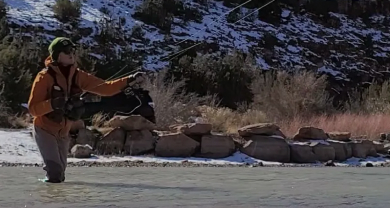
Euro Nymphing Tips & Tricks for Fall and Winter with Heavy Point Flies:
Use Tungsten Beads for Depth
Heavy point flies with tungsten beads are ideal for reaching deep, cold-water lies where trout hold during fall and winter. Use them as your anchor fly to quickly get to the strike zone.
Adjust Your Leader Length
In deeper or slower winter pools, lengthen your leader for better control. Aim to keep your flies just above the riverbed where trout are feeding.
Focus on Current Seams
Target slower seams and eddies where trout conserve energy. Heavy point flies help maintain contact with the bottom in these areas, even in tricky currents.
Keep Your Rig Streamlined
Avoid using too many flies. A heavy point fly paired with a lighter dropper creates a more effective presentation and reduces tangles.
Dial In Your Drifts
Fall and winter trout are less aggressive. Ensure your drifts are as drag-free as possible. Keep your sighter angled slightly upstream to detect subtle strikes.
Vary Your Fly Selection
Use heavy nymphs like stoneflies, caddis larva, or jigged pheasant tails in natural tones to imitate the limited food sources available in colder months.
Work the Soft Water
Trout often hold in slower, softer water when temperatures drop. Heavy flies help probe these zones effectively without lifting off the bottom.
Stay Low and Stealthy
With lower flows and clearer water in winter, approach runs with caution. Keep your profile low and minimize unnecessary movement.
Use Fluorocarbon Tippet
Fluorocarbon is less visible and sinks better, pairing perfectly with heavy point flies. Opt for a lighter diameter (5x or 6x) to avoid spooking fish in clear water.
Experiment with Colors
As fall turns to winter, trout respond well to flies with hot spots or bright accents. Try point flies with a touch of orange, red, or UV reflectivity to grab their attention.
Take Advantage of Low Light
Early morning and late afternoon are prime times. Trout are more likely to move for food when the sun is low, and heavy point flies will ensure you’re fishing deep where they’re feeding.
Monitor Water Temps
Focus on fishing during the warmest part of the day (mid-morning to afternoon) when trout are slightly more active. Heavy flies help cover deeper runs where fish are most likely to be.
Stay Mobile
If one pool or run isn’t producing, move. In colder months, trout are often grouped together, so locating one fish can lead to finding several.
Use a Soft Set
Strikes in winter can be incredibly subtle. Set the hook lightly but promptly on any hesitation, twitch, or pause in your sighter.
Layer Up and Stay Warm
Being comfortable allows you to focus. Dress appropriately with wicking layers and insulated gear so you can stay out longer and fish more effectively.
By using these strategies, you’ll maximize your success and enjoy the challenges of Euro nymphing through the colder months. Tight lines! 🎣
Please Note: Part of this content was created using AI tools, reviewed, and edited by our team to ensure accuracy.
Ingredients & Recipe:
• Hook: Umpqua XC 400BL Jig 60 – Size 14
• Bead: Fulling Mill Tungsten Drop Bead – Copper / 3.5MM
• Thread: Semperfli Nano Silk – 6/0 / Brown
• Tailing Material: Hareline Speckled Ginger CDL / SUB – MFC Micro -Barred Fibbetts
• Rib: Stripped Peacock Hurl
• Underbody: Veevus Holographic Tinsel – Small / Cranberry
• Collar: Fulling Mill CDC Feathers – Natural
Check out some of our favorite Fly Tying Gear:
- Vise – Dynaking Barracuda Deluxe Pedestal Vise
- Scissors – Kopter ABSOLUTE Blade Micro Serrated Edge Thin Point
- Bodkin – Dr. Slick Jumbo Carbon Fiber Bodkin
- Whip Finisher – Tiemco Midge Whip Finisher
- Tool Kit – Umpqua Dream Stream Plus 7 Piece Fly Tying Tool Kit
