

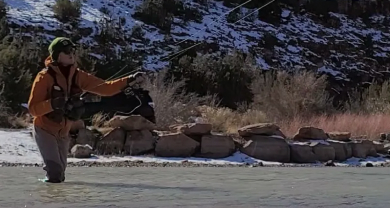


Welcome Back to Tying Tuesday! This week join Kyle in the studio as he ties the cutest little mouse pattern, known as the Master Splinter! Fly fishing with mouse patterns is an exhilarating way to target predatory fish like trout and bass. These larger fish often go after mice swimming across the water, especially in low-light conditions.
Tips & Tricks
Fly fishing with mouse patterns is an exhilarating way to target predatory fish like trout and bass. These larger fish often go after mice swimming across the water, especially in low-light conditions. Below are some tips and tricks to help you successfully fish with mouse patterns:
1. Choose the Right Time
- Night and Low Light: Mouse patterns are most effective during dusk, dawn, and at night. These are the times when fish feel more comfortable leaving the depths to hunt prey at the surface.
- Overcast Days: On cloudy or rainy days, you can also find success, as fish may be more willing to feed near the surface.
2. Pick the Right Waters
- Larger, Slower Pools and Banks: Fish often look for prey near the banks, especially under overhanging trees, or in slower water where mice are more likely to fall in.
- Undercuts and Structure: Cast near banks with undercut ledges, downed trees, and submerged structures where larger fish hunt for mice and other prey.
3. Use the Right Gear
- Rod: A 6-weight or higher rod is preferred. Mouse patterns are bulky and wind-resistant, so you need enough power to cast these larger flies.
- Tippet: Use a 0X to 3X tippet to avoid break-offs when fighting larger fish. Mice patterns often attract aggressive strikes, so you’ll want a stronger setup.
4. Perfect the Presentation
- Splashing Presentation: You don’t always have to be subtle with mouse flies. A splashing cast that lands with a noticeable “plop” mimics a mouse falling into the water, which can draw attention.
- Dead Drift with Twitching: After the fly lands, let it drift naturally. Occasionally twitching or gently moving the rod tip to create subtle movement mimics a struggling mouse.
- Skating: On still water, you can strip the line in a series of short, quick bursts to create the illusion of a swimming or panicked mouse. In moving water, allow the fly to skate across the surface for a realistic effect.
5. Strike Management
- Wait Before Setting: Don’t set the hook immediately upon a strike. Allow the fish to fully take the fly before setting the hook. A premature strike may result in a miss.
- Side Set Hook: When setting the hook, avoid an overhead motion. Instead, sweep the rod to the side for a more secure hookset in the fish’s mouth.
6. Fly Patterns and Customization
- Variety of Patterns: There are several other effective mouse patterns such as the Morrish Mouse, Mighty Mouse, and Mr. Hankey. Experiment with different sizes and shapes depending on the conditions and target species.
- Customization: Sometimes adding a small strip of foam or trimming the body can help the mouse sit lower or higher in the water, depending on your desired presentation.
7. Patience is Key
- Larger Fish, Less Action: Targeting bigger fish with mouse patterns can lead to fewer strikes, but the fish you do attract will often be larger and more aggressive.
- Slow Retrieval: Fish may follow a mouse pattern for a while before striking, so don’t rush your retrieve. Allow enough time for the fish to commit.
8. Use Sound to Your Advantage
- Noisy Patterns: Some mouse patterns incorporate materials like deer hair or foam that can create a wake or disturbance on the water. This noise can entice predatory fish.
- Splash and Plop: Creating a splash when casting can simulate the sound of a mouse entering the water, which can trigger a strike from hungry fish.
9. Target Species
- Trout: Larger brown trout are particularly prone to chasing down mouse patterns, especially at night.
- Bass: Largemouth bass also love the topwater action that a mouse fly provides.
- Pike and Musky: If you’re in waters where these predators lurk, a mouse fly can trigger explosive topwater strikes.
10. Stay Stealthy
- Night Fishing Silence: When night fishing, remain as quiet as possible. Fish tend to be extra cautious in the dark, and loud noises or sloppy casting can spook them easily.
- Minimize Light: If night fishing, use minimal light to avoid spooking the fish. A red-light headlamp is less disturbing to the fish than a bright white light.
By following these tips and practicing patience, you’ll maximize your chances of landing trophy-sized fish on mouse patterns.
Please Note: Part of this content was created using AI tools, reviewed, and edited by our team to ensure accuracy.
Ingredients & Recipe
- • Hook – Gamakatsu, B10S Stinger: Size 4
- • Thread – UNI Thread, 3/0: Brown
- • Tail – Fulling Mill, Micro Rabbit Zonker Strip
- • Foam Body – Fulling Mill, 2MM Foam: Brown
- • Body Hair – Fulling Mill Cross Cut Rabbit Zonker: Natural
Check out some of our favorite Fly Tying Gear:
- Vise – Dynaking Barracuda Deluxe Pedestal Vise
- Scissors – Kopter ABSOLUTE Blade Micro Serrated Edge Thin Point
- Bodkin – Dr. Slick Jumbo Carbon Fiber Bodkin
- Whip Finisher – Tiemco Midge Whip Finisher
- Tool Kit – Umpqua Dream Stream Plus 7 Piece Fly Tying Tool Kit

