

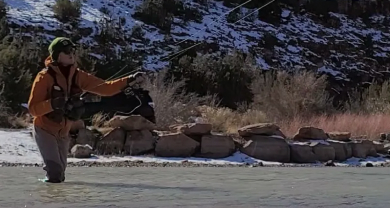


This week, Kyle is in the studio crafting a viewer-requested fly pattern called the Clueless Caddis. This caddis imitation is loaded with buggy characteristics and features just enough hi-vis material on top to keep it visible on the water, even when riding low. Kyle tested it out on a popular creek just west of Denver and had great success fooling some trout. Give the Clueless Caddis a try, and let us know what you think!
Tips and Tricks for Fly Fishing with Caddis Flies
- Match the Hatch: Observe the natural caddis flies in the area you’re fishing. Pay attention to their size, color, and behavior. Matching your fly pattern closely to the natural caddis can significantly increase your chances of success.
- Vary Your Presentation: Caddis flies are active and can skitter across the water’s surface. Try different presentations, including dead-drifting, twitching, or even skating the fly across the surface to imitate the natural movement of an adult caddis.
- Use a Downstream Drift: Presenting the fly downstream can be very effective, as it mimics the natural drift of a caddis fly. This approach also helps reduce drag, making your presentation look more natural.
- Fish the Emerger Stage: Caddis flies are particularly vulnerable during the emergence stage when they’re transitioning from pupae to adults. Use an emerger pattern just below the surface, especially when you see trout rising but not breaking the surface.
- Focus on the Evening Hatch: Caddis flies often hatch in the late afternoon or early evening. This is prime time for trout to feed on them, so plan your fishing trip around these hours for the best action.
- Utilize Soft Hackle Caddis Patterns: If fish are feeding just below the surface, a soft hackle caddis pattern can be deadly. It mimics an emerging caddis and can entice strikes from trout that are ignoring surface flies.
- Try a Dry-Dropper Rig: Pair a high-floating caddis dry fly with a caddis pupa or emerger pattern dropped below it. This setup allows you to cover both surface and subsurface feeding trout.
- Be Mindful of Water Temperature: Caddis hatches are more prolific in warmer water, typically when temperatures are between 55-65°F (13-18°C). Target these conditions for more active hatches and feeding trout.
- Use Hi-Vis Indicators or Flies: In low light or fast-moving water, a caddis fly with a hi-vis indicator or a brightly colored post can help you track your fly more easily and detect subtle takes.
- Keep an Eye on Rippled Water: Caddis flies often land in riffles or faster-moving sections of water. Focus your casts in these areas, where trout are likely to be waiting for an easy meal.
By applying these tips and tricks, you’ll be better equipped to target trout with caddis flies and increase your chances of a successful day on the water.
Please Note: Part of this content was created using AI tools, reviewed, and edited by our team to ensure accuracy.
Ingredients & Recipe
- Hook: Tiemco 100, Size 10
- Thread: Semperfli Nano Silk 50D, Olive
- Dubbing: Natures Spirit, Fine Natural, Olive
- Wing Case: Fulling Mill CDC, White
- Hi-Vis Wing: Antron Yarn, Fluorescent Yellow & Orange
- Wapsi Elk Body Hair*
Check out some of our favorite Fly Tying Gear:
- Vise – Dynaking Barracuda Deluxe Pedestal Vise
- Scissors – Kopter ABSOLUTE Blade Micro Serrated Edge Thin Point
- Bodkin – Dr. Slick Jumbo Carbon Fiber Bodkin
- Whip Finisher – Tiemco Midge Whip Finisher
- Tool Kit – Umpqua Dream Stream Plus 7 Piece Fly Tying Tool Kit

* Items marked with an asterisk replace a material that has been discontinued since this video was filmed. We picked the closest match we carry today.
