

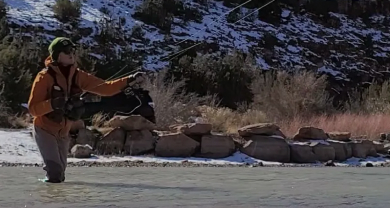


Welcome back to Tying Tuesday! This week, Taylor takes us into the studio to showcase a fly he’s been perfecting for quite a while—introducing the Bullwinkle Baetis! As rugged as it is refined, this fly is loaded with moose hair at every turn, giving it that irresistibly buggy appeal that trout simply can’t ignore. And let’s not forget the crackle bead, delivering a flashy pop that’s sure to grab attention and earn those double takes from even the pickiest fish. Trust us, this fly doesn’t just look good—it’s built to perform. Let’s dive in and see what makes the Bullwinkle Baetis a must-have for your box!
💥 Tie it. Fish it. Love it. #TyingTuesday
Tips and Tricks for Fly Fishing with Baetis Fly Patterns in the Winter
Baetis (Blue-Winged Olives) are one of the few aquatic insects active during winter, making them a key part of a successful winter fly-fishing strategy. Here’s how to make the most of your time on the water:
1. Match the Hatch
- Size Matters: Winter Baetis are typically smaller, ranging from size 16 to 22. Be sure to have a variety of sizes to match what’s in the water.
- Color Accuracy: Focus on olive, gray, or brown tones for both nymphs and adults. Subtle variations in body and wing color can make a big difference.
2. Nymphing is King
- Go Subsurface: Trout feed primarily on Baetis nymphs drifting in the water column during winter. Use a two-fly rig with a heavier attractor pattern (e.g., Pat’s Rubber Legs) and a smaller Baetis nymph as the trailer.
- Dead Drift: Presentation is key—achieve a natural drift by ensuring your nymphs float drag-free in the current. Use indicators or Euro nymphing techniques for better control.
3. Focus on Midday Hatches
- Timing: Baetis are most active during the warmest part of the day, usually between 11 a.m. and 3 p.m. Plan your fishing around this window for maximum success.
- Watch for Rises: During a hatch, trout will key in on emerging Baetis. Transition to emerger patterns or dry flies when you notice surface activity.
4. Go Small and Light
- Tippet: Use 5x to 7x fluorocarbon tippet to avoid spooking fish in clear, cold winter water.
- Fly Selection: Tiny emerger and nymph patterns like RS2s, Barr’s Emergers, or Pheasant Tails with slim profiles are highly effective.
5. Work Slow, Fish Deep
- Low Water Temps: Trout metabolism slows in cold water, so they conserve energy by feeding in slower currents and deeper pools. Target these areas with weighted flies or sink tips to reach the strike zone.
- Patience is Key: Let your flies drift slowly through likely holding spots. Cover the water methodically, as trout are less likely to chase fast-moving prey.
6. Pay Attention to Emergers
- Emerging Baetis: Trout often key in on the transitional stage between nymphs and adults. Patterns like the CDC Baetis Emerger or Sparkle Dun can be deadly.
- Swing Your Flies: A gentle swing at the end of a drift can imitate an emerger struggling to reach the surface and trigger strikes.
7. Don’t Overlook Dry Flies
- Small Dries: During a Baetis hatch, switch to a Parachute BWO, Comparadun, or CDC Baetis in sizes 18-22. Present them delicately on smooth water.
- Use Emerger Rigs: Pair a dry fly with a trailing emerger pattern to cover more water and fishing scenarios.
8. Adjust to Winter Challenges
- Stay Warm and Safe: Dress in layers, use gloves with good dexterity, and keep a hand warmer in your pocket.
- Avoid Icy Guides: Apply paste or spray to your rod guides to reduce icing and ensure smooth line handling.
9. Observe and Adapt
- Spotting Fish: Look for slower tailouts, deep runs, and edges of seams where fish tend to stack up in winter.
- Experiment: If one fly doesn’t produce, switch sizes, colors, or go from nymphs to dries. Trout can be selective in the cold months.
Fly fishing with Baetis patterns in winter requires finesse and patience, but the rewards are worth the effort. Perfect your presentation, adapt to conditions, and enjoy the serene beauty of winter fishing!
Recipe:
• Hook: Tiemco 201R
• Bead: Hareline Tungsten Crackle Bead, Black and Orange
• Thread: Semperfli Nano Silk, 12/0 Black
• Tailing Material: Wapsi Moose Body Hair
• Body Material: Wapsi Moose Mane
• Wing Husk: Wapsi Moose Body Hair
• Thorax: Wapsi Strung Peacock Hurl
• Leg: Soft Hackle Pheasant Tail / Sub – Wapsi Soft Hen Hackle Saddle
Check out some of our favorite Fly Tying Gear:
- Vise – Dynaking Barracuda Deluxe Pedestal Vise
- Scissors – Kopter ABSOLUTE Blade Micro Serrated Edge Thin Point
- Bodkin – Dr. Slick Jumbo Carbon Fiber Bodkin
- Whip Finisher – Tiemco Midge Whip Finisher
- Tool Kit – Umpqua Dream Stream Plus 7 Piece Fly Tying Tool Kit
