

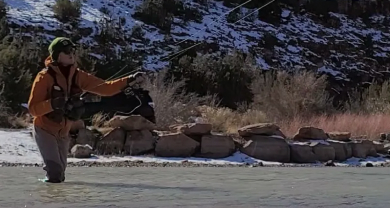


In this week’s episode of Tying Tuesday, join Travis Hanson as he ties the Miracle Cone! Featuring a tapered color, alluring ribbed profile, and striking gills, this chironomid pattern is sure to be irresistible to trout!
Tips & Tricks to Fishing Chironomids:
Chironomids, also known as midges, are a significant part of a trout’s diet, especially in still waters like lakes and ponds. Fly fishing with chironomids can be highly effective, particularly during the early spring and late fall when these insects are most active.
Understanding Chironomids
Chironomids go through a complete metamorphosis, including the egg, larva, pupa, and adult stages. Most anglers focus on imitating the larval and pupal stages, as these are the stages that trout feed on the most.
Gear and Setup
- Rod and Reel: A 4 to 6-weight rod with a matching reel is generally suitable for chironomid fishing.
- Line: A floating line is commonly used, but having a selection of intermediate and sinking lines can be beneficial.
- Leader and Tippet: Use a long, fine leader (9-12 feet) with a 4x to 6x tippet to ensure a natural presentation.
Chironomid Patterns
Here are a few popular chironomid fly patterns:
- Chironomid Larva (Bloodworm): Often tied in red, brown, or black to imitate the larval stage. Common patterns include:
- San Juan Worm
- Bloodworm Larva
- Chironomid Pupa: Typically tied with a slim profile, often with a beadhead to mimic the emerging pupa. Colors like black, olive, and red are popular. Patterns include:
- Ice Cream Cone
- Chromie
- Zebra Midge
- Adult Chironomid: Though less commonly used, imitating the adult midge can be effective during a hatch. Patterns include:
- Griffith’s Gnat
- Parachute Midge
Fishing Techniques
- Suspended Under an Indicator: This is one of the most effective ways to fish chironomid patterns. Use a strike indicator to suspend your fly at the desired depth, usually just above the bottom.
- Straight-Line or Naked Technique: Fish without an indicator, allowing your fly to sink to the bottom and then slowly retrieving it with a hand-twist or slow strip.
- Dropper Rig: Use a chironomid pupa as a dropper below a dry fly or another nymph to cover different parts of the water column.
Tips for Success
- Match the Hatch: Pay attention to the size, color, and stage of the chironomids in the water you’re fishing.
- Slow Presentation: Chironomids move very slowly, so your retrieve should be equally slow and deliberate.
- Depth Control: Finding the right depth is crucial. Start fishing close to the bottom and gradually work your way up the water column.
- Patience: Chironomid fishing can require patience and persistence, as the takes can be subtle and the fish can be selective.
Ingredients & Recipe
- Hook: TMC 201R, Size 14
- Bead: Umpqua Tungsten Bead 2.4MM
- Thread 1: Semperfli Classic Waxed – Red 8/0
- Primary Rib: Semperfli Iridescent Thread – Pearl 3/0
- Secondary Rib: UTC Ultra Wire – Red, Small
- Thread 2: Semperfli Classic Waxed – Black 8/0
- Thread 3: Veevus – White 14/0
- UV Resin: Solarez Bone Dry
- Gills: Ostrich Plumes
Check out some of our Shop’s Favorite tools:
- Vise – Dynaking Barracuda Deluxe Pedestal Vise
- Scissors – Kopter ABSOLUTE Blade Micro Serrated Edge Thin Point
- Bodkin – Dr. Slick Jumbo Carbon Fiber Bodkin
- Whip Finisher – Tiemco Midge Whip Finisher
- Tool Kit – Umpqua Dream Stream Plus 7 Piece Fly Tying Tool Kit

