

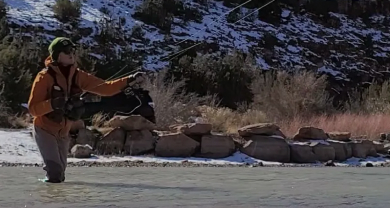


🎣 Welcome to another edition of Talk & Tie Tuesday! We’re thrilled to be joined in the studio this week by Bill Dombroski — a standout guide from the Trout Trickers crew! Bill shares his personal journey into the art of fly tying and guiding, and ties a fly that holds deep meaning. This week’s featured pattern is a tribute to his late friend, fellow guide, and accomplished angler, Scott Thompson. Scott was a Signature Tyer for Fulling Mill and the creator of the Lil Foamy — a true game-changer and one of the most productive flies in Bill’s guide box.
Tie it. Fish it. Love it.
Let’s go! 🎣💥
Check out Trout Trickers – They are an AvidMax endorsed guide service – we have fished with them, and love who they are, what the are about, and how they operate! TroutTrickers
Recipe:
• Hook: Tiemco 2488H, Size 18
• Thread: Nano Silk 18/0, Olive
• Bead: Hareline Mottled Tungsten Bead 5/64, Olive
• Tail: Olive Dyed Hungarian Partridge
• Ribbing: UTC Ultra Wire Small, Copper
• Wing Case: Fulling Mill Bug Foam, 2mm White
• Dubbing Collar: Hare’s Ear Ice Dub, Peacock
Tips & Tricks
🎣 Tips & Tricks for Fishing Emerger Patterns in Spring and Early Summer
🌱 1. Understand the Hatch Timing
- Spring hatches often include Blue-Winged Olives (BWOs), Midges, and early Caddis.
- Early summer brings on Pale Morning Duns (PMDs), more prolific Caddis, and even Green Drakes depending on your elevation.
- Watch the water: if trout are rising but refusing duns or dries, they’re probably keyed in on emergers just below the surface.
💧 2. Target the Film Zone
- Emergers are most effective when fished in or just below the surface film.
- Use CDC winged emergers, loop-wing patterns, or sparkle emergers that sit flush or partially submerged to mimic the struggling insect.
🪶 3. Use a Dry-Dropper Rig
- Tie a visible dry fly (like a parachute Adams or elk hair caddis) and hang an emerger 12–24 inches below it.
- This lets you track your emerger and adds buoyancy without spooking fish with indicators.
🎯 4. Fish Slower, Softer Water
- During hatches, trout often move to softer current seams, eddies, or inside bends to feed on emerging insects.
- These areas give you better control and a more natural drift.
🕵️ 5. Downstream Presentations Are Key
- Present the fly downstream or across to prevent lining the fish and improve your drift.
- Use a reach cast or a tuck cast to get slack and delay drag.
🧵 6. Go Light on the Tippet
- Use 5X to 6.5X tippet depending on water clarity and fish pressure.
- Thinner tippet allows better movement of your emerger and a softer presentation.
🐛 7. Match the Color & Size
- Observe natural bugs in the water or use a seine net.
- Match size first, then profile and color. Spring insects are often smaller (size 18–22), while summer bugs might run larger (14–18).
🔄 8. Vary Your Emerger Styles
Try mixing these types depending on fish behavior:
- Trailing shuck patterns (imitates nymphal case)
- Crippled emergers (incomplete emergence – easy meal!)
- Bubble-back or CDC winged (visible and lifelike)
⏰ 9. Hit the Hatch Windows
- Spring hatches often occur midday (11 AM–3 PM), especially during overcast weather.
- Early summer bugs can hatch from late morning through dusk, so adjust your timing accordingly.
🔍 10. Watch for Subtle Takes
- Takes on emergers can be gentle sips or swirls — very different from splashy rises to dries.
- If fish are rising without contact, you may need to switch to a suspended or slightly deeper emerger.
Check out some of our favorite Fly Tying Gear:
- Vise – Dynaking Barracuda Deluxe Pedestal Vise
- Scissors – Kopter ABSOLUTE Blade Micro Serrated Edge Thin Point
- Bodkin – Dr. Slick Jumbo Carbon Fiber Bodkin
- Whip Finisher – Tiemco Midge Whip Finisher
- Tool Kit – Umpqua Dream Stream Plus 7 Piece Fly Tying Tool Kit
