

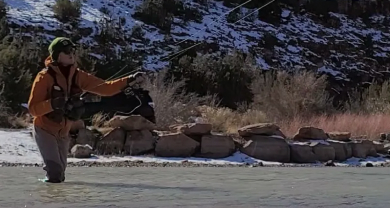


This week, we’re featuring an absolute standout — a passionate young angler who volunteers and teaches with Denver Trout Unlimited, a guide for Trout Trickers, and someone who ties some seriously wicked bugs. Say hello to the one and only… Copland! Today he is in the studio for the first time to craft up a super buggy little hopper pattern that he has been crafting together for some time. He took some inspiration from some great terrestrials out there and put some time in at the vise and came up with this fish crusher.
Tie it. Fish it. Love it.
Let’s go! 🎣💥
Recipe:
• Hook: Tiemco TMC 100 Dry Fly Hook – Size 10
• Thread: UTC 140D – Tan
• Tail: Ringneck Pheasant Tail
• Body Foam: Fulling Mill 3mm Bug Foam – Tan
• Underbody Buggy: Wapsi Strung Peacock Herl
• Legs: Wapsi Sili Legs – Green Pumpkin
• Hackle: MFC Barred Saddle Hackle – Yellow
• Wing: McFlyFoam – White
• Collar: Wapsi Strung Peacock Herl
***Please note, some materials sell out quickly on Tuesdays after a video drops – you can always call Customer Service if you have a question about an alternate material option (720-836-3619)***
🪰 Spring Hopper Fly Fishing Tips & Tricks
1. Use Smaller Hoppers Early in the Season
Spring hoppers aren’t the big juicy ones you see in late summer. Go smaller — sizes 12–16 are more realistic and won’t spook picky spring trout.
2. Pair With a Dropper
Spring fish can be sluggish and may ignore topwater flies unless they see movement or an easy snack. Run a small nymph (like a pheasant tail, RS2, or zebra midge) about 12–24 inches below your hopper for a deadly combo.
3. Target Sunny, Windy Afternoons
Warm, breezy spring afternoons can knock early-season terrestrials into the water. Focus on grassy banks, overhanging bushes, and undercut banks.
4. Twitch It!
Add a little movement. A light twitch or drag can wake up trout on colder days and make your hopper look like a struggling bug worth chasing.
5. Use Natural Colors
Spring hoppers and terrestrials haven’t developed full summer coloration. Browns, olives, and tans work better than bright yellows or reds early in the season.
6. Fish the Edges
Even in spring runoff or higher flows, fish will push to the edges. Hopper-dropper rigs in side channels, slower seams, and eddies can be killer.
7. Adjust for Runoff
If rivers are high or off-color, use a buoyant hopper like a Chubby Chernobyl or PMX to float above swifter current — it doubles as a great indicator for your dropper fly.
8. Be Patient
In early spring, dry fly eats can be subtle. Keep your eyes on the fly and wait for the sip — premature hook sets are easy to make when you’re excited.
9. Try Hoppers on Stillwater
Ponds and lakes near grass can produce great topwater hopper action in spring. Windblown banks are your friend.
10. Think Beyond Grasshoppers
Beetles, ants, and small crickets can mimic early spring terrestrials. Mix them in when hoppers aren’t working.
Check out some of our favorite Fly Tying Gear:
- Vise – Dynaking Barracuda Deluxe Pedestal Vise
- Scissors – Kopter ABSOLUTE Blade Micro Serrated Edge Thin Point
- Bodkin – Dr. Slick Jumbo Carbon Fiber Bodkin
- Whip Finisher – Tiemco Midge Whip Finisher
- Tool Kit – Umpqua Dream Stream Plus 7 Piece Fly Tying Tool Kit
