

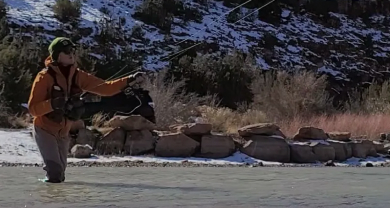


How to tie Barr’s Damsel Nymph
In this episode, we’re joined by our good friend, an incredible angler, skilled guide, and exceptional fly tyer—Mr. Travis Hanson! He’s here not just to tie his favorite fly but to share his fly tying journey with you. We hope you enjoy this segment! Let us know your thoughts in the comments so we can continue growing this channel and community.
Ingredients & Recipe
• Hook: Tiemco TMC 2302, size 14
• Thread: Semperfli Classic Waxed, 8/0 – Pale Olive
• Tail:: MFC Marabou Mini Barred, Brown Olive
• Body Rib: 4X Tippet
• Hareline Scud Back
• Body Dubbing: Spectra Ice Dubbing, Color 32
• Wings: Mallard Flank, Olive
• Eyes: Wapsi Mono Eyes, Small
• Resin: Solarez Thin
Tips & Tricks for Fishing Stillwater After Ice-Off & Using Damsel Nymphs 🎣🔥
As ice begins to recede, stillwater fisheries come back to life, with trout moving into the shallows to feed on emerging insects and baitfish. One of the best patterns for this time? Damsel nymphs! These slim, wiggly, and highly active critters become prime trout food as they migrate toward the banks before hatching. Here’s how to maximize your success:
1. Target the Right Water
After ice-off, trout are typically found in warmer, food-rich areas rather than deep basins. Focus on:
✅ Shallow Flats (2-10 ft): This is where trout cruise for warming water and early insect activity.
✅ Weedy Edges & Drop-Offs: Damsel nymphs thrive in aquatic vegetation—trout will hunt them aggressively.
✅ Inlets & Outlets: Oxygenated water attracts active fish.
✅ Rocky Shorelines & Mud Bottoms: These areas warm up quickly and hold aquatic insects.
2. Fish Damsel Nymphs Like the Real Thing
Damsel nymphs don’t drift like traditional nymphs—they swim with a slow, pulsing motion, making retrieve technique key.
🎯 Use an Intermediate or Floating Line: A slow-sinking intermediate line helps keep the fly at the right depth.
🎯 Slow Strip or Hand-Twist Retrieve: Mimic the natural movement of a real damsel nymph—slow, steady pulls with pauses.
🎯 Short Bursts Work Too: A twitch-and-pause retrieve imitates a nymph darting toward cover.
🎯 Fish Close to Structure: Cast near weed beds, reeds, or submerged logs where damsel nymphs are most active.
3. Time It Right
- Midday to Afternoon: As the sun warms the shallows, trout become more active and hunt for damsels.
- Pre-Hatch Season (Late Spring to Early Summer): Damsel nymphs start migrating weeks before hatching, so trout get aggressive on them.
- Cloudy Days & Light Wind: These conditions keep trout comfortable and more willing to stay in the shallows.
4. Match the Hatch (Fly Selection)
- Olive, Tan, or Brown Nymphs: Most damsel nymphs are olive to light brown in color—keep it natural!
- Sizes 10-14: Match the local nymphs, but don’t be afraid to go slightly bigger early in the season.
- Unweighted or Lightly Weighted Flies: Since damsel nymphs swim, not crawl, avoid overly heavy patterns that sink too fast.
🔹 Great Patterns:
✔️ Hale Bopp Leech (for a bulkier damsel look)
✔️ Damsel Nymph (Marabou or Beadhead)
✔️ Swimming Damsel
✔️ Balanced Damsel (for hanging under an indicator)
5. Consider Other Ice-Off Stillwater Tactics
✅ Leech Patterns: As trout wake up from winter, they love an easy meal like a slow-moving leech (black, brown, olive).
✅ Chironomids Under an Indicator: If trout are holding deeper, a chironomid on a static rig can be deadly.
✅ Streamer Retrieves: Small baitfish imitations can trigger aggressive strikes, especially for larger fish.
6. Experiment with Depth & Speed
Trout in stillwater are always on the move, so vary your presentation:
🎯 Start shallow, then work deeper if needed.
🎯 Change your retrieve—if slow strips don’t work, try quick twitches.
🎯 Use a floating line with a long leader if trout are hugging the surface.
7. Stay Stealthy
- Use a long leader (9-12 feet) with fluorocarbon for extra stealth.
- Approach quietly—shallow-water trout are spooky after ice-off.
- Look for signs of feeding—rises, wakes, or subtle swirls near the shoreline.
By focusing on natural presentation, strategic location, and timing, you’ll have a killer ice-off stillwater session. Tie on a damsel nymph, slow it down, and get ready for some aggressive eats! 🎣🔥

