

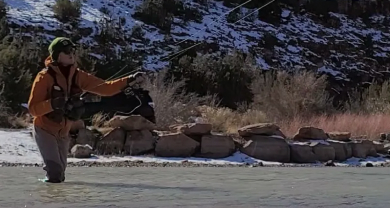


Welcome back to Tying Tuesday! This week, Kyle is back in the studio whipping up one buggy beast of a caddis imitation—introducing the Squatch Caddis – Wild, Hairy, and Irresistible!
Like its legendary namesake, this fly is a master of disguise, lurking in the currents before ambushing unsuspecting trout. Built with buggy euro nymph dub, it dances under the water with an almost supernatural presence—a lot like Bigfoot himself!
Whether you’re hunting trophy fish or just looking to stir up some river monsters, the Squatch Caddis is one pattern you don’t want to leave home without.
💥 Tie it. Fish it. Love it. #TyingTuesday
Recipe:
• Hook: MFC, Wide Gap Jig Hook, Size 16
• Bead: Fulling Mill Tungsten 1/8, Matte Black
• Thread: UTC 70D, Brown Olive
• Body Rib: Hareline Half Round D Rib, Medium, Chartreuse
• Dubbing: Fulling Mill Euro Nymph Thorax Dub, Dark Mottled
***Please note, some materials sell out quickly on Tuesdays after a video drops – you can always call Customer Service if you have a question about an alternate material option (720-836-3619)***
This weekend while fishing a local tailwater…I asked my longtime military buddy, who got me into fly fishing a few years ago; if caddis flies hatch in the winter. He wasn’t sure…and neither was I.
So today I did some research:
Winter Caddis Activity
- Early Winter (Late November–January)
- Some species of winter caddis (Dolophilodes distinctus) hatch during the coldest months, particularly in New England and the Upper Midwest.
- These caddisflies emerge in the morning, making them a prime target for winter dry fly fishing.
- Late Winter (February–March)
- More caddis species start appearing as the water slightly warms.
- Micro-caddis species may become active, especially in warmer days with midday sun exposure.
Best Conditions for Winter Caddis Hatches
- Stable Water Temperatures – Tailwaters and spring-fed streams where water stays between 35-45°F.
- Low, Clear Flows – Easier for fish to key in on smaller hatches.
- Mornings & Early Afternoon – Winter caddis often emerge during the first few daylight hours.
Winter Caddis Fly Patterns
- Winter Caddis Dry (Dolophilodes distinctus)
- Size: 18-22
- Colors: Dark tan, brown, or gray
- Use a down-wing dry fly like the Elk Hair Caddis, but in smaller sizes.
- Caddis Pupa
- A small, tan or olive pupa pattern fished in slow water can be effective.
- CDC Caddis Emerger
- Size: 18-20
- Fish it in film or just below the surface when fish are rising.
- Soft Hackle Caddis
- Works well swung downstream to imitate emerging caddis.
Tips & Tricks for Fishing Caddis Nymphs in the Winter on a Tailwater Fishery 🎣❄️
While caddis hatches are minimal in winter, caddis larvae and pupae remain an important food source for trout, especially in tailwaters where water temperatures are stable. Here’s how to effectively fish caddis nymphs during the winter months:
1. Understand Winter Caddis Behavior
- Most active stage: Caddis larvae are available year-round. In winter, trout key in on drifting larvae and occasional pupae.
- Primary species: Net-spinning caddis (Hydropsychidae) and case-building caddis (Brachycentrus, aka Mother’s Day Caddis) are common in many tailwaters.
✅ Target: Larval imitations (green rock worms, cased caddis) more than pupal patterns.
2. Nymphing Strategy for Winter Caddis
🔹 Dead-Drift with Minimal Movement
- Caddis nymphs don’t wiggle much in cold water. Keep drifts natural and slow with minimal line movement.
- Tight-line nymphing (Euro-style) is highly effective in tailwaters.
🔹 Use a Two-Fly Rig
- Lead Fly (Weight): Small tungsten bead caddis larva (size 14-18)
- Dropper Fly (Smaller, Subtle): Emerger or soft hackle (size 18-22)
- Example:
- 🎯 Top Fly: Tungsten Bead Cased Caddis (size 14-16)
- 🎯 Bottom Fly: Soft Hackle Caddis or Zebra Midge (size 18-22)
🔹 Fish Near the Bottom
- Caddis larvae drift near the riverbed, so make sure your flies are bouncing bottom occasionally.
- Adjust depth using small split shot or a heavier point fly.
3. Best Caddis Nymph Patterns for Winter
📌 Hydropsyche (Green Rock Worm) Imitations
- Beadhead Green Rock Worm (Size 14-18)
- Electric Caddis (Size 14-18, Olive, Chartreuse)
📌 Cased Caddis Imitations
- Tungsten Cased Caddis (Size 14-16, Tan/Olive)
- Walt’s Worm or Sexy Walt’s Worm (Size 14-18, Brown/Olive)
📌 Pupal/Emerger Stage
- Soft Hackle Caddis (Size 16-20, Tan or Olive)
- CDC Caddis Emerger (Size 18-20, Gray/Olive)
4. Where to Find Winter Trout Feeding on Caddis
🎯 Slow, Deep Runs
- Tailwater trout conserve energy in deep, slow-moving pools.
- Key Depth: 3-6 feet deep, right above the bottom.
🎯 Seams & Soft Edges
- Fish where slow water meets moderate current, as caddis larvae often get dislodged here.
🎯 Below Riffles
- If it’s a warmer winter day, trout move slightly higher into transition water where food is drifting in.
5. Ideal Water Conditions for Caddis Nymph Fishing
✅ Water Temp: 36-45°F
✅ Cloudy Days: Overcast conditions make trout less skittish.
✅ Low-Medium Flows: Easier to keep nymphs near the bottom.
✅ Mornings to Midday: Trout are most active during the warmest part of the day (10 AM – 3 PM).
6. Winter Tailwater Caddis Nymphing Setup
🎣 Rod: 10′ 3wt or 4wt (Euro setup) or 9′ 5wt (Indicator setup)
🎣 Leader: 9-12 ft, fluorocarbon (better sink rate)
🎣 Tippet: 5X-6X Fluoro (6X for clear water)
🎣 Indicator Setup: Small Thingamabobber or New Zealand Wool
🎣 Euro Setup: Heavier point fly (cased caddis) + unweighted dropper (soft hackle caddis)
7. Adjust for Selective Tailwater Trout
✔ Go Smaller in Pressure Areas: If fish ignore size 16 caddis nymphs, drop to size 18-20.
✔ Mix in Midges: Trout eat midges 90% of the time in winter, so pair a caddis larva with a Zebra Midge.
✔ Set Hooks Softly: Tailwater fish have soft mouths in winter—avoid aggressive hook sets.
Final Thought: Why Caddis Nymphs in Winter?
Even when no caddis are hatching, trout recognize caddis larvae as a consistent, easy meal. In warmer winter tailwaters, an accurate, deep nymph drift with the right larva or pupa pattern can be deadly effective!
Check out some of our favorite Fly Tying Gear:
- Vise – Dynaking Barracuda Deluxe Pedestal Vise
- Scissors – Kopter ABSOLUTE Blade Micro Serrated Edge Thin Point
- Bodkin – Dr. Slick Jumbo Carbon Fiber Bodkin
- Whip Finisher – Tiemco Midge Whip Finisher
- Tool Kit – Umpqua Dream Stream Plus 7 Piece Fly Tying Tool Kit
