

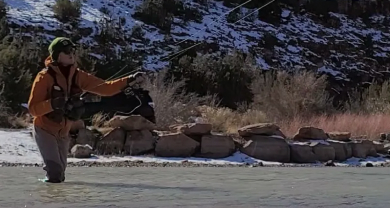


Welcome back to Tying Tuesday! This week, join Ben in the studio as he ties Lance Egan’s GTI Caddis—your new go-to imitation! The GTI, short for Go-To Imitation, is the perfect pattern for mimicking drifting caddis larvae. We’re big fans of this fly, from the tie to the catch. Its multi-rib construction and scud back make it an absolute game-changer on the water, and the trout can’t seem to resist!
Fishing with caddis nymphs can be incredibly effective, especially since caddisflies are a staple in many trout diets. Here are some tips and tricks to maximize your success:
1. Know the Lifecycle
- Caddis Nymphs (Larvae): Caddis larvae, also called caddis nymphs, are often found drifting in the current or crawling on the bottom. Understanding their behavior will help you present your fly more naturally.
- Pupa Stage: The pupa stage is when the caddis nymph starts to ascend to the surface, making it a prime time for fishing.
2. Use the Right Patterns
- Popular Caddis Nymph Patterns: Patterns like the Green Rock Worm, Caddis Larva, or GTI Caddis are excellent choices.
- Match the Color and Size: Match the natural caddis nymphs in your local waters by selecting the right size and color.
3. Fish Near the Bottom
- Drift Close to the Bottom: Caddis nymphs naturally drift near the streambed, so aim to present your fly close to the bottom where trout are likely to be feeding.
- Use Weight: Add split shot or use a weighted nymph to get your fly down quickly, especially in faster currents.
4. Use a Strike Indicator
- Sensitive Indicator: A small, sensitive strike indicator will help detect subtle strikes. Caddis nymphs are often taken softly, so this can make a big difference.
- Indicator Placement: Adjust the placement of the indicator based on the depth of the water. A general rule is to place the indicator 1.5 to 2 times the depth of the water.
5. Employ a Dead Drift
- Natural Drift: Focus on achieving a dead drift, where your fly moves naturally with the current. Mend your line upstream to eliminate drag.
- Short-Line Nymphing: Short, controlled drifts with minimal slack will help keep your fly in the strike zone longer.
6. Fish the Riffles and Runs
- Prime Spots: Caddis nymphs are commonly found in riffles and runs where the water is oxygenated. Focus on these areas to find actively feeding trout.
- Pocket Water: Cast into pockets and seams where fish might be holding.
7. Try a Double Nymph Rig
- Two Flies: Fish a caddis nymph in combination with another nymph, like a mayfly or stonefly pattern, to cover more of the water column.
- Experiment with Depths: Use different weights or depths to see where the fish are feeding most actively.
8. Use Fluorocarbon Tippet
- Stealth: Fluorocarbon is less visible in water and sinks faster, making it ideal for nymph fishing.
- Strength: It’s also more abrasion-resistant, which is helpful when fishing near rocks or debris.
9. Be Patient and Observant
- Watch for Surface Activity: If you notice trout rising but not fully breaking the surface, they might be taking emerging caddis pupae. Switch to an emerger pattern if needed.
- Adjust Tactics: If you’re not getting bites, try adjusting your depth, fly size, or even the speed of your drift.
10. Fish Early or Late
- Prime Times: Early morning and late evening are often the best times to fish caddis nymphs, as trout are more active during these periods.
11. Don’t Forget the Pupae
- Emergence: Caddis nymphs often transform into pupae before emerging. Fishing a caddis pupa pattern during a hatch can be extremely effective.
- Swinging Technique: During emergence, let your fly swing in the current as if it’s rising to the surface, mimicking the natural behavior of the pupa.
12. Keep Moving
- Cover Water: If you’re not getting bites in one spot, move to another. Trout may be more active or feeding on caddis nymphs in a different section of the stream.
By understanding the behavior of caddis nymphs and applying these techniques, you’ll increase your chances of success on the water. Happy fishing!
Please Note: Part of this content was created using AI tools, reviewed, and edited by our team to ensure accuracy.
Ingredients & Recipe
Check out some of our Shop’s Favorite tools:
- Hook: Partridge of Redditch, Czech Nymph Hook – Size 14
- Bead: Fulling Mill Tungsten Bead Gold, 3.2MM
- Wire: Hareline Lead Free Round Wire
- Thread: UTC Ultra Thread, 70D – Olive
- Tail: Wapsi Strung Peacock Hurl – Orange
- Rib 1: UTC Monofilament Thread, Size – 004
- Rib 2: Hareline Krystal Flash, Olive
- Body Dubbing: Wapsi Life Cycle Dubbing Dispenser, Olive
- Head Dubbing: Fulling Mill Tactical Microflash Dub – Bronze Peacock
- Shell Back: Hareline Scud Back, Summer Duck, Size 1/8
Check out some of our favorite Fly Tying Gear:
- Vise – Dynaking Barracuda Deluxe Pedestal Vise
- Scissors – Kopter ABSOLUTE Blade Micro Serrated Edge Thin Point
- Bodkin – Dr. Slick Jumbo Carbon Fiber Bodkin
- Whip Finisher – Tiemco Midge Whip Finisher
- Tool Kit – Umpqua Dream Stream Plus 7 Piece Fly Tying Tool Kit

