

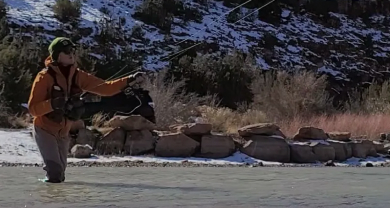


Welcome back to Tying Tuesday! This week Ben is back in the studio crafting his version of the Rubber Bugger. A Rubber Bugger Fly is a variation of the traditional Woolly Bugger fly, incorporating rubber materials to enhance its effectiveness. Rubber legs or appendages add extra movement and vibration in the water, making the fly more attractive to fish.
Fishing with Woolly Buggers can be highly effective due to their versatility and ability to mimic a variety of aquatic prey. Here are some tips on how to fish Woolly Buggers:
Equipment:
- Rod and Line: A 5-6 weight fly rod is suitable for most Woolly Bugger fishing. Use a floating line for shallow water or a sink-tip or full sinking line for deeper water.
- Leader: A 7.5 to 9-foot tapered leader with a 4X or 5X tippet is typically appropriate.
Techniques:
- Retrieve Styles:
- Strip Retrieve: Cast the Woolly Bugger and let it sink to the desired depth. Use a strip retrieve, pulling the line in short, quick strips to create a jerking motion. This imitates a struggling baitfish or other prey.
- Swinging: Cast across and slightly downstream, letting the fly swing across the current. This method is effective in rivers and streams.
- Dead Drift: Cast upstream and let the fly drift naturally with the current, imitating a drifting insect or worm.
- Depth Control:
- Use a weighted Woolly Bugger or add split shot to the leader to get the fly deeper.
- Experiment with different sink rates if using a sinking line.
- Covering Water:
- Fan Casting: Cover a large area by casting in a fan pattern. Start with a cast straight out, then gradually work your way to the left and right.
- Move Locations: If you’re not getting bites, move to a different spot. Woolly Buggers are effective in various environments, including lakes, ponds, rivers, and streams.
Ingredients & Recipe
- Hook: Tiemco 5262 – Size 8
- Bead: Wapsi Pocket-Eye Conehead
- Thread: Semperfli Nano Silk – 100D
- Tail Material: Hareline Marabou Blood Quills
- Body Material: Hareline UV Polar Chenille – Medium
- Rubber Legs: MFC Rubber Hackle – Yellow / Black
- Dubbing Collar: Larva Lace Supreme Dubbing – Grasshopper
Check out some of our Shop’s Favorite tools:
- Vise – Dynaking Barracuda Deluxe Pedestal Vise
- Scissors – Kopter ABSOLUTE Blade Micro Serrated Edge Thin Point
- Bodkin – Dr. Slick Jumbo Carbon Fiber Bodkin
- Whip Finisher – Tiemco Midge Whip Finisher
- Tool Kit – Umpqua Dream Stream Plus 7 Piece Fly Tying Tool Kit

