



by Patrick Blackdale
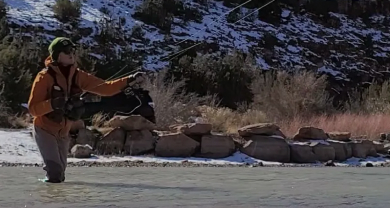
A glide is a river feature which occurs downstream of a riffle but before the tailout of a run. Glides are often perceived as featureless parts of a run, lacking the obvious structure that typically holds fish. Due to this perception, glides are frequently overlooked as areas to find feeding fish in a trout stream. In fact, glides can be one of the most productive features in a river system, if fished appropriately. Here, we’ll look at three ways to fish a glide effectively, resulting in many more fish to hand.
Be Stealthy
Fish residing in glides can be spooky, requiring a stealthy approach and presentation to fool them. Most importantly, you should approach a glide slowly and quietly. Tromping through the water will scare away any potential targets well before you are in casting position. Additionally, mind your shadow. Try to position yourself such that you aren’t casting a shadow into the glide you are about to fish. By taking your time to get into the proper position before casting, you are likely to spot active trout, setting you up for your presentation.
Once you’re in a good casting spot, offer a delicate presentation. I typically utilize a long leader of 12 feet or more to ensure that I don’t spook fish with my fly line. For a leader formula, I typically start with a Rio Fluoroflex 9’ 4x tapered leader. Then, I tie on an additional 3-4’ of Rio Fluoroflex 5x tippet. If conditions warrant throwing dries, I’ll just fish a single dry – that will be the most delicate rig for fishing a glide. However, if fish are feeding subsurface, a dry/dropper rig employing another 2-3’ of Rio Fluoroflex 5x tippet should suffice. Your exact rigging will vary based on conditions, but starting out as delicate as possible is a good rule of thumb when fishing a glide.
Be Methodical
Lots of trout can reside in a single glide, so it’s a good idea to fish each section thoroughly. When I was guiding, I would teach my clients to cover water with a fine-toothed comb using a simple formula. First, fish the bank-side water nearest to you before wading into the river (anglers often forget this and spook the fish right under their nose). Then, systematically fish strips of water, stepping closer to the far bank after every few drifts. To help wade confidently, I adore using my Fishpond Nomad Net as a wading staff. After meticulously fishing a transect of river from bank to bank and likely catching a few fish, now retreat to the original bank, move upstream a few steps, and repeat the process. Slow down, observe, cover water, catch more fish.
Get Creative
If you’re striking out using the above suggestions, don’t be afraid to experiment with your technique. As I mentioned before, glides are often loaded with trout, so before moving on to more attractive water, I like to try what I call a “cleanup rig”. For me, this is usually a terrestrial pattern like the Thunder Thighs Hopper. Your cleanup rig could be a streamer or a mouse; just choose something that will “splat” the water and attract attention. Sure, this could spook the fish in the glide, but at this point I’ve already tried being delicate, so I’ve got nothing to lose. Think of the cleanup rig as a “now or never” moment for the trout, they’re either going to attack your meaty, oversized offering, or they will reject it. It’s a gamble worth taking, and in tough fishing conditions this strategy can be deadly.
Glides don’t need to be overlooked, in fact they’re fish factories and can be extremely productive. The next time you find a featureless glide between a riffle and a tailout, try approaching it sneakily with a delicate rig, and pick it apart one drift at a time. You’ll more than likely find several willing fish hiding in plain sight. If all else fails, have confidence in your cleanup rig to trigger aggressive strikes from discerning trout. By practicing these simple tips, you’ll catch more fish and save yourself the walk to the next “prime” hole. Sometimes the best water is right under your nose!
Patrick’s Bio
Patrick Blackdale is an avid angler who loves sharing his passion with others. He was a professional guide in Colorado for 10 years, operated a fishing outfitter, and has been a volunteer for Trout Unlimited. Patrick now lives in Maine with his wife and dogs, where he writes about fishing, ties too many flies, and plans his next angling adventures. You can find him at @pblackdale on Instagram.
