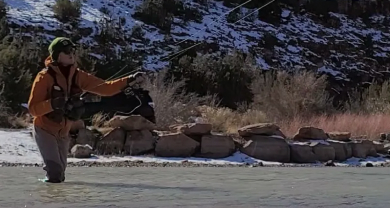
Learning A Good Fly Fishing Knot

Back in the day when I was about 9 years old and deemed old enough by “Mom” to go fishing alone, it was all I wanted to do – and all I did after chores were done. We lived about a quarter-mile from a river that was stocked for the trout season and had its share of typical river species as well. Unfortunately, my dad was always working in the family business to make ends meet for us, so it was just me and my meager gear. Learn More “Learning A Good Fly Fishing Knot”

How To Tie: The Two Bit Hooker

The Two Bit Hooker

The Two Bit Hooker is yet another masterpiece from local fly tyer and fisher Charlie Craven. The brilliance of adding two beads to a fly could have only been though of by him. Adding lead wire to a fly can be a great concept but doesn’t help keep a thin mayfly like abdomen that is necessary for a lot of our matching the hatch needs. With an extra bead under the thorax you get the needed added weight and are still able to keep the slim body profile. This fly is a must during run off and will also fish great year round in faster and deeper water.

Learn More “How To Tie: The Two Bit Hooker”

How To Tie The Big Eyed Stuart Little: Fly Tying Tutorial Video

The Big Eyed Stuart Little

Mice, voles, rats, and other rodents commonly construct their homes on the banks of rivers. Look for big cut banks that back up to long grass and weeds and rocky formations on the side of the river or stream. After a heavy rain or increase in flow it will flush out these critters from their homes sending them down river dead or alive. Not only are they getting forced into the water because of high water, but during low light hours when there’s the most bug activity these rodents will be feeding on flying and clinging insects along the rock formations near the water’s edge. While foraging a mouse/rodent may swim from one spot to another. This makes an easy meal for larger predatory fish to snag a quick meal. I went with the big glow in the dark eyes to make it easier to fish during low light hours giving you a better idea of where your fly is when fishing it. Carry your UV torch with you and hit the eyes in between cast to really make them glow.

Learn More “How To Tie The Big Eyed Stuart Little: Fly Tying Tutorial Video”

How To Tie: The RS-2, The Most Versatile Fly on the Market

The RS-2 is a versatile fly pattern designed to imitate callibaetis, blue wing olives, and midges. Available in various colors like black, dun, purple, and Adams gray, this fly features a slender body, forked tail, and an emerging wing that closely resembles small mayflies and midges. The RS-2 excels as an emerger, can be used as a dropper fly in two-fly rigs, and is perfect for sight fishing wary trout.

Learn More “How To Tie: The RS-2, The Most Versatile Fly on the Market”

How To Tie: Barry’s Carp Fly

Barry’s Carp Fly

THE OG carp fly. This fly is intended to be a heavy fly that will get down quick to the feeding zone of any carp. It will have a heavier presentation when it hits the water but don’t let it scare you from using it. This fly is extremely effective in moving water and gets the job done in still water situations. Make SURE you have at least one in your box when you go out.

Learn More “How To Tie: Barry’s Carp Fly”

How To Tie: The Para Midge

The Para Midge

The Para Midge dry fly is a go to Midge adult in my box. It works great all year round and on a variety of waters. This fly is simple to tie but deadly when fished. The Para Midge is one of my favorites due to its fish ability. With the Klinkhammer style post it allows this fly to be fished high and dry or just under the water surface film where a lot of emerging insects fail to break free and are swallowed up.

Learn More “How To Tie: The Para Midge”